
Parkdean digital detox
A guide to unplugging & reconnecting
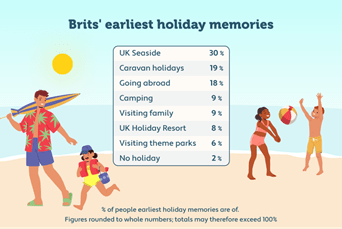
Brits' earliest holiday memories
Holiday criteria: Beach holidays, Caravan holidays, UK seaside breaks
At Parkdean Resorts we love nothing more than seeing people connecting and spending quality time together, which is why we have launched our latest campaign, Parkdean Unplugged.
We want to remind people of the joys of putting down devices and spending quality time reconnecting with one another; whether that’s bonding over stories, sharing memories of holidays gone by or picking up a pack of cards and playing games.
We found that the majority of Brits have one thing in common: their early memories are of the simplest parts of family holidays.
“Going to Cornwall to see grandad in a caravan”
“Having sandwich spread sandwiches on the beach with family”
“Making sandcastles on the beach in Devon”
“Eating ice cream on the seafront”
Whatever your earliest holiday memory, the key theme is being in the moment and spending time with loved ones.
As part of the Unplugged campaign, we surveyed 2,000 Brits1 and found that memories of seaside holidays without screens span all ages and include every generation. From Boomers (39%) to Gen Z’s (31%) the majority stated that their earliest holiday memory is of a beach or seaside break in the UK, with the second most popular childhood holiday memory being of a traditional UK caravan holiday (19%).
What is a digital detox or unplugged holiday?
You may be wondering what an unplugged holiday is: well, it's a term coined for a trip where you intentionally disconnect and put down your electronic devices. This time away from screens and technology is what's known as a digital detox and is designed to allow you to relax, be present, and focus on real-life experiences while spending quality time with loved ones.
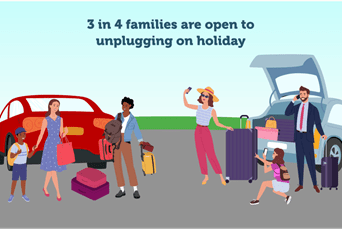
Brits want to reconnect on holiday
Holiday criteria: Multigenerational holidays, weekend breaks for couples, UK family holidays
It may come as no surprise that we believe everyone can benefit from regular trips away with loved ones, taking time to reconnect, to switch off and to create lasting holiday memories together. Whether it’s a weekend break or a longer staycation, an unplugged holiday provides the opportunity to do just that and is something that three in four (75%) families are open to.
Our study found that almost two-thirds (63%) of Brits currently take regular short breaks with their partner, but nearly nine in ten (89%) think it would be beneficial to take them on a more regular basis in order to reconnect with one another.
Relationship expert and co-founder of SoSynced, Jessica Alderson, has explained why embracing an unplugged holiday and taking time away from our screens is so important for our relationships.
1. You feel more present - “Putting your phone down and unplugging is one of the best ways to make sure you’re present with your family or partner. If someone is constantly checking their phone, it can subtly communicate that there are more important or more interesting things going on.”
2. You make your loved ones feel seen - “There are exceptions, such as urgent work situations, but if you’re constantly checking your phone when you’re with loved ones, it can leave them feeling unseen, unheard and unimportant. This isn't about never looking at your phone, but rather finding a balance that lets the people around you know they come first.”
3. You feel more connected to one another - “It's understandable that 91% of families use devices during shared family time. Life doesn't stop just because you're on holiday. But there's a difference between a quick check and constantly disappearing into your phone in ways that affect how present you are and disrupt how connected you are.”
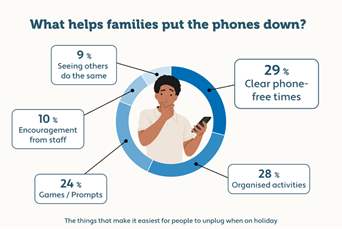
How to unplug while on a holiday or staycation
Holiday criteria: Family activities, holiday games, sociable holidays
Nostalgic British holidays were always full of uninterrupted social moments with friends and family. Whether it was going to the disco with siblings and cousins, playing hide and seek with new friends or spending the evening with the whole family while the football was on, the days were full of fun, and the time always flew by too fast.
To help unplugged holiday goers create holiday memories that will last a lifetime, we've shared our own top tips:
"Plan a few screen-free moments into each day and say yes to trying something new. Our guests can book activities online before they arrive or while they're on park, making it easy to fill your holiday with memorable 'Unplugged' moments. From the exciting new activities at Vauxhall and Highfield Grange to our Grown Up Getaways, we've created even more ways for guests of all ages to reconnect, have fun and make lasting memories together."
Finding out new things about each other is often something people take for granted and don’t spend enough time doing. To get the conversation started, we’ve designed our own card game, which you can download here.
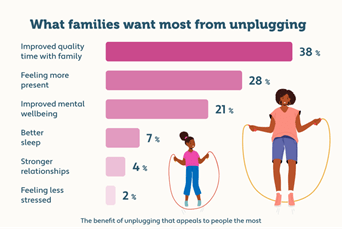
The benefits of unplugging on holiday
Holiday criteria: Switching off, stress-free holidays, feeling present
Heading off on an unplugged break comes with several benefits, but being able to spend improved quality time with family is what excites Brits the most (38%) about the concept. This is followed by the opportunity to feel more present (28%) and an overall improvement to their mental well-being (21%).
Dr Ravi Gill, Practitioner Psychologist, explains how unplugging invites presence back into our lives and shares the top three benefits of going on an unplugged holiday:
“With us all being ‘online’ all the time, constantly connected, scrolling, and multitasking, lots of research studies show the link with screen fatigue, anxiety, and distracted attention. Unplugging offers a decompression from the ‘always-on’ digital world, replacing endless notifications with slower, more focused time that invites presence and sensory engagement rather than rapid digital consumption.
For many people (particularly Gen Z), unplugged retreats align with values around sustainability, slow living, and authenticity. Engaging in time away from screens intentionally, away from productivity culture, reinforces a sense of chosen identity rather than reactive living.”
1. Reduces cortisol levels - A weekend away reduces environmental stressors (emails, notifications, routines) and allows the body to downshift more fully into parasympathetic regulation. When combined with slow, hands-on activities, this can meaningfully reduce cortisol and mental fatigue.
2. Improves focus - Attention Restoration Theory suggests that natural, low-demand environments help replenish depleted cognitive resources. Unplugged activities like gardening retreats, craft weekends, and baking workshops all allow ‘soft fascination’, which restores focus better than passive screen time.
3. Strengthens relationships - Shared tactile activities (cooking together, crafting, planting) increase cooperation, eye contact, and attuned conversation. Oxytocin and social synchrony tend to increase during collaborative physical tasks, strengthening relationships more than parallel digital interaction.
Who is going on an unplugged holiday?
Holiday criteria: Young families, group holidays, creating memories
Taking the perfect picture for Instagram, capturing content for TikTok, or simply staying up to date with what's going on online has become a habit for many - especially those in younger generations, and more often than not it takes over treasured time together on holiday.
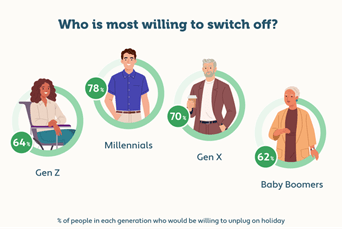
While it’s inevitable that devices will be somewhat present on holiday, as participating in fun TikTok trends with family can be a great way of bringing loved ones together, Jessica explains why some generations tend to rely on their devices more than others and therefore why some are more open to the concept of unplugging.
“One reason Boomers are the least willing to unplug could be because they didn't grow up with the digital wellness conversation and may be less likely to see device use as something that needs to be managed. They tend to use devices more purposefully for things like phone calls and messages, rather than constant scrolling, which many millennials have fallen into.
“While they use tech more often in daily life, Millennials tend to be more aware of the toll of being glued to their phones, having grown up during the mental health and wellness movement. They're also old enough to remember life before mobile phones, so it’s no wonder they’re the most willing to unplug."
Spending uninterrupted time with family
Holiday criteria: Screen-free holidays, family time, time together
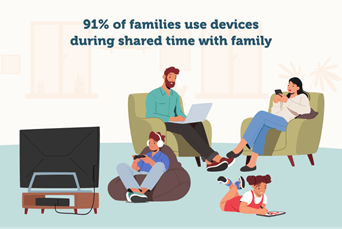
We know how hard it can be in the modern day to unplug from devices, especially when managing work, commitments and busy schedules, but one of the biggest culprits for interrupting family moments is screens. Our study found that nine in ten (91%) families use their devices during shared family time, whether that be at meal times, during time in the evenings or on a family holiday.
While seven in ten (70%) families do spend time together at least weekly, uninterrupted moments may still be rare. Only one in three families manage to spend uninterrupted time together daily, but despite this, over four-fifths (85%) still feel connected to their family.
Where in the UK do families feel least connected?
Holiday criteria: Regular breaks, family connection, South West holidays
Device use varies from household to household, but our study also found that opinions on using screens during family time also differs between regions.
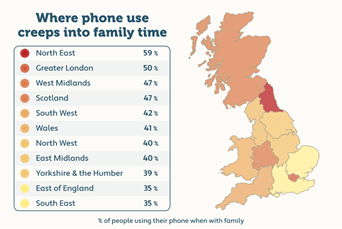
Almost three in five (59%) people who live in the North East admitted that they become distracted by their phone either always or often when spending time with family, with those living in London following in second, with half (50%) admitting to the same thing.
Residents of the South East, however, are the least likely to disrupt family time by engaging with their devices, with just over a third (35%) doing so.
When it came to how connected Brits feel to their family, the North West came out on top, with nine in ten (91%) people in the region stating that they feel connected to their family. The region in second place is the North East, where 88% feel connected, and the South East comes in third with a connection rate of 87%.
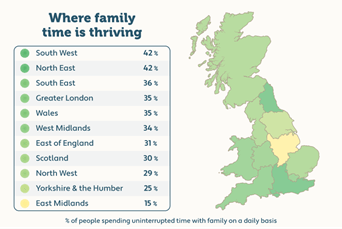
Spending time with your family on a regular basis is important, but having the time to do so isn’t always easy. The regions in the UK where daily uninterrupted family time is thriving most are the North West and South West, where over two-fifths (42%) spend uninterrupted time with their family every single day.
On the other hand, the region that spends the least amount of uninterrupted daily time with their family is the East Midlands (15%). This region also has the largest number of people who feel ‘not at all connected’ with family (11%).
As we head into the summer season, we hope to bring loved ones together through the Unplugged campaign, encouraging more moments of togetherness and helping people reconnect to create lasting holiday memories.
Methodology
¹Multiple Onepulse surveys of 2000 UK adults were conducted w/c 14th of April to find out people’s earliest childhood holiday memories, their attitudes to unplugged holidays and the impact screens are having during family time.